





about us
Stanadyne è un leader globale della tecnologia automobilistica nei sistemi di gestione del carburante e dell'aria basati sul motore. Siamo specializzati in tecnologie pionieristiche nei sistemi di iniezione di benzina e diesel per i motori che fanno muovere il nostro mondo, e in componenti aftermarket e rigenerati che aiutano a mantenere quei motori sulla strada. I nostri prodotti migliori della categoria offrono una qualità superiore e un vantaggio competitivo, offrendo potenza, prestazioni ed efficienza e consentendo ai nostri clienti di stare al passo con le emissioni in rapida evoluzione e la domanda dei consumatori.
Founded in 1876, our experience is rooted in the foundation of the automotive industry, and we’ve been a trusted partner serving some of the most well-known brands in the world. In 2019, we acquired PurePower Technologies, a leader in engineering and remanufacturing diesel injectors, turbochargers, valves, and other components for OEM and the aftermarket.
Our focus today is in designing, engineering, and enabling solutions for our customers with our diverse global team. Headquartered in Jacksonville, NC, USA, we have design, engineering and manufacturing facilities in the United States, China, India, and a worldwide network of aftermarket service dealers and distributors.
company history
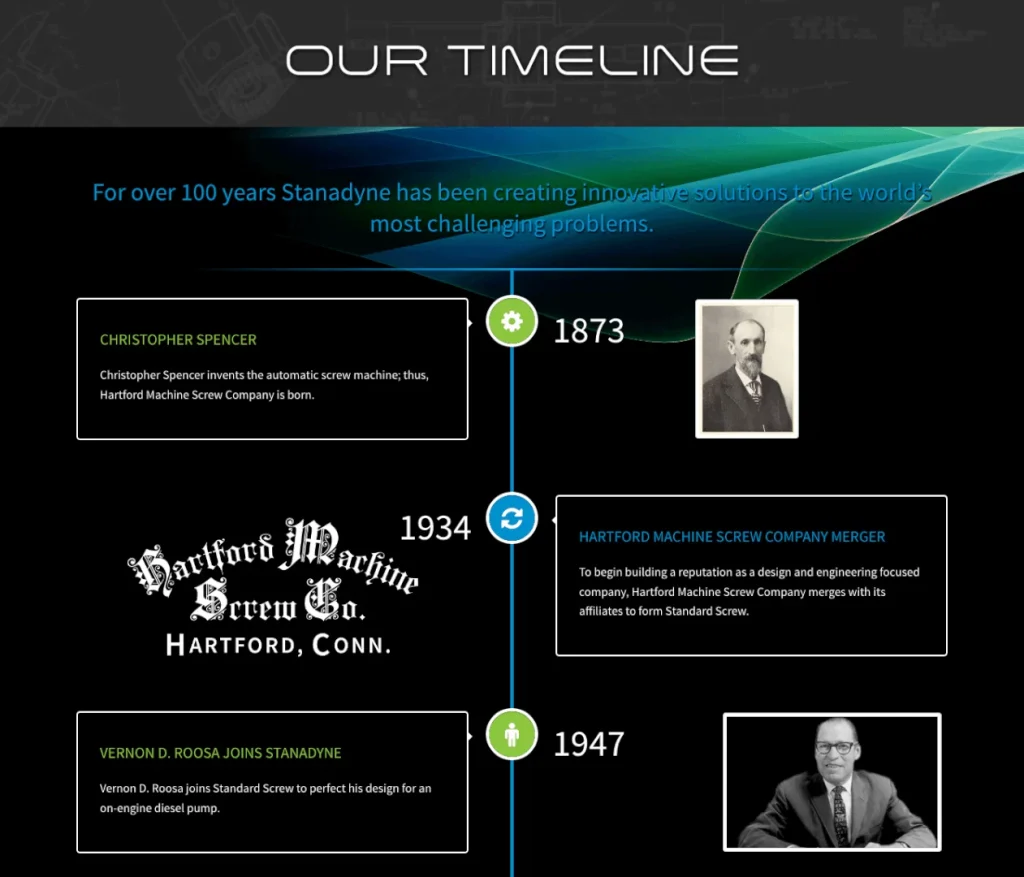
For more than 150 years Stanadyne, and its predecessor companies, has thrived on creating one-of-a-kind solutions to the world’s most vexing problems in diesel and gasoline fuel systems. The company dates back to 1876 as the Hartford Machine Screw Company and was founded on its revolutionary innovation, the automatic screw machine. In ensuing years, Hartford Machine Screw Company markedly improved the efficiency of manufacturing, helping to fuel the industrialization of America.
In 1900, the company changed its name to the Standard Screw Company, eventually becoming a leading supplier of precision metal components. From 1914 to 1945, Standard Screw handled contracts from the United States government to help produce aircraft parts and war materials.
In the post-World War II era, the company entered a new age of innovation. Vernon D. Roosa joined with his design concept for a diesel fuel injection pump that was smaller, lighter, and more technically advanced than the fuel pumps available at the time. The rotary pump, as it became known, greatly improved the efficiency, power, and practicality of diesel engines with new fuel distribution technology, allowing diesel engines to become the primary choice for heavy equipment and machinery.
Come il design della pompa rotativa si è evoluto, così hanno fatto le sue applicazioni, irrompendo nel mercato automobilistico e dei trasporti, permettendo ai produttori di veicoli di sviluppare nuovi motori più efficienti. L'uso dei motori diesel continuò ad aumentare e la Standard Screw Company si adattò, affrontando le sfide con nuove pompe e sistemi di alimentazione, introducendo ogni volta cambiamenti innovativi che aumentavano l'efficienza e le prestazioni. Altre invenzioni degne di nota di questo periodo sono: la pompa rotativa DB Model (1952) e l'iniettore di carburante Pencil Nozzle® (1963).
Quando la Standard Screw Company è diventata Stanadyne nel 1970, l'azienda ha inaugurato una nuova ondata di tecnologie, compresi i filtri del carburante e gli additivi. All'epoca, le pompe per carburante diesel Stanadyne offrivano il design più efficiente e l'azienda conobbe una rapida crescita durante la crisi petrolifera del 1973.
Negli anni seguenti, l'azienda ha ampliato il suo portafoglio per includere il governo elettronico pompe rotative diesel, pompe diesel common rail e pompe del carburante a iniezione diretta per i motori a benzina. Nei primi anni 2000, Stanadyne ha introdotto nel mercato automobilistico la prima pompa a iniezione diretta di benzina da 200 bar. È stata rapidamente seguita da un'altra pompa a iniezione diretta di benzina per l'industria delle corse. Con la rapida innovazione nei sistemi di alimentazione a benzina e diesel, l'azienda era a un bivio. Nel 2014, l'azienda ha venduto il business dei filtri del carburante e degli additivi per concentrarsi esclusivamente sulle pompe del carburante e sugli iniettori.
Today, the company is re-imagining its product portfolio and providing tailored solutions for its customers. As the company embraces the future of fuel, it continues to innovate and develop new technology to improve the efficiency, power and performance of fuel systems.